
Perimenopause: What’s Happening to Your Body?
If you’re in your late 30s or 40s, you might have started noticing changes in your cycles, mood, or energy.
These shifts could be signs of perimenopause, the natural phase that leads up to menopause. Most women enter perimenopause around their mid-40s, but it can start earlier or later. This phase can last anywhere from 4 to 10 years before menopause officially begins.
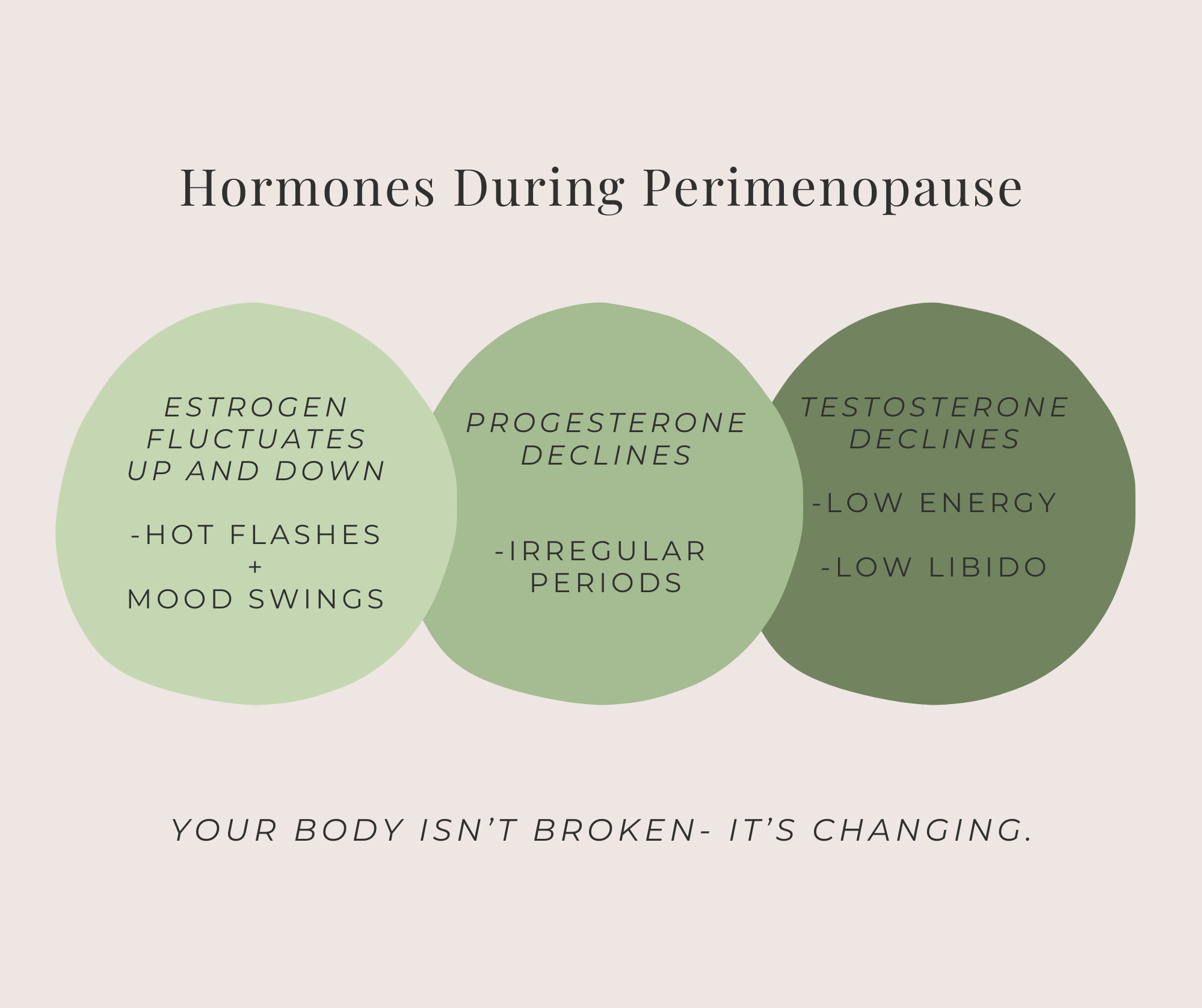
Hormones on the Move
During perimenopause, your body’s hormones are doing a bit of a dance:
-Estrogen: Levels can go up and down unpredictably. This fluctuation can cause hot flashes, night sweats, or even mood swings.
-Progesterone: As ovulation becomes less regular, progesterone drops, which may lead to irregular periods or changes in bleeding.
-Testosterone: This hormone slowly declines too, which can affect your energy, strength, and libido.
Common Symptoms You Might Notice
Every woman experiences perimenopause differently, but here are some common signs:
-Irregular periods – cycles may be shorter, longer, heavier, or lighter.
-Hot flashes & night sweats – sudden warmth that can interrupt your day or sleep.
-Mood changes – feeling more irritable, anxious, or emotional.
-Sleep troubles – difficulty falling or staying asleep.
-Vaginal dryness – lower estrogen affects lubrication and comfort.
-Body changes – weight may shift, especially around the midsection, and you might notice a loss of muscle tone.
-Lower libido or energy – sex drive and stamina can change.
-Brain fog – occasional forgetfulness or difficulty focusing.
How Long Do These Changes Last?
Perimenopause is gradual. For some women, symptoms are mild and easy to manage. For others, they can feel more noticeable. On average, perimenopause lasts 4–10 years, slowly leading into menopause—the point when you haven’t had a period for 12 months in a row.
Tips to Support Your Body
The good news? There’s plenty you can do to feel your best during this transition:
-Move your body – strength and mobility exercises help maintain muscle, bone health, and energy.
-Prioritize sleep – even small improvements can make a big difference in mood and focus.
-Eat well – balanced meals support hormones, energy, and weight management.
-Manage stress – gentle movement, mindfulness, or meditation can help calm the mind.
Remember:
Perimenopause is a natural part of life, and what you’re experiencing is completely normal. Understanding what’s happening in your body and taking small steps to support it can help you navigate this stage with confidence, comfort, and clarity.
